
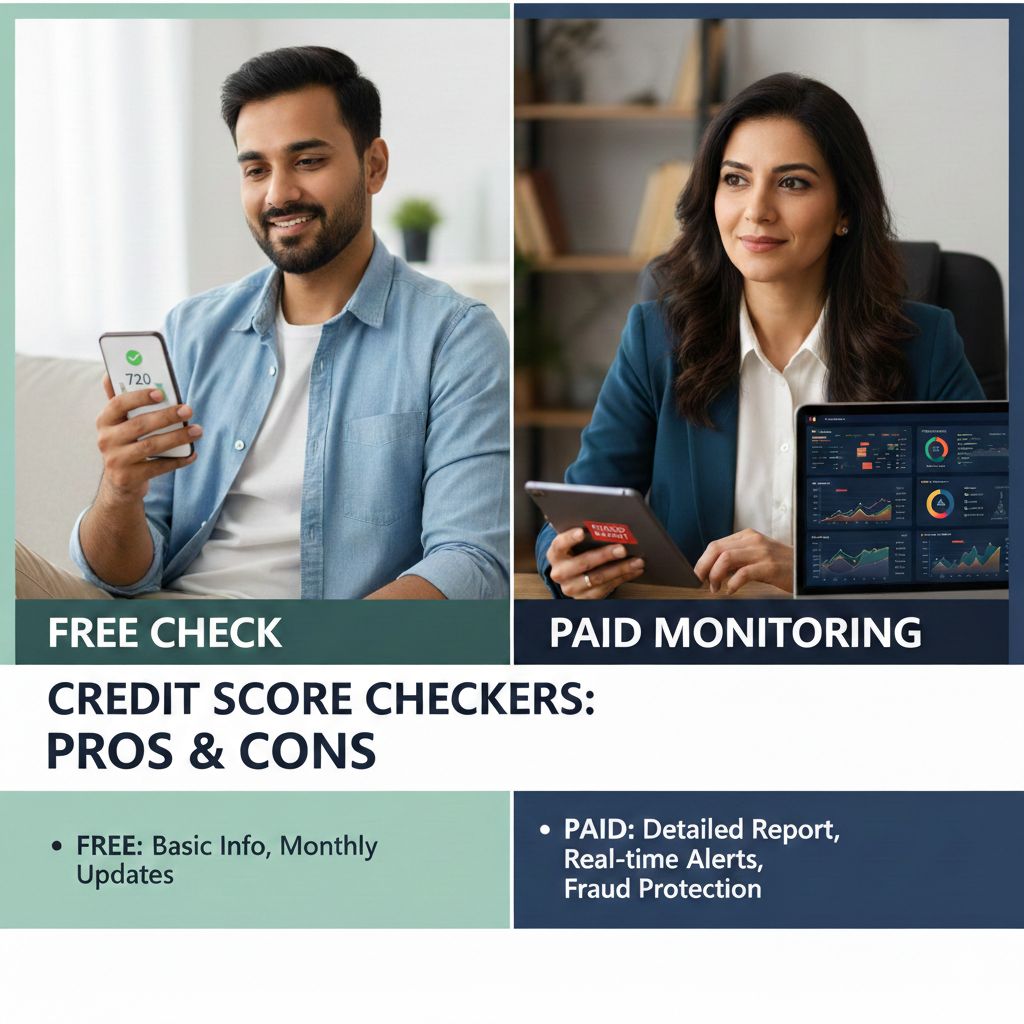
Free vs Paid Credit Score Checkers: Pros & Cons
Credit scores are an essential part of your finances. When you apply for anything that requires credit (loans, credit cards, and interest rate negotiations), lenders look at your credit score to evaluate your Credit worthiness.
With growing education about credit health in India, there are many tools for consumers to utilize to monitor their credit score - some tools offer free services and others require a monthly subscription. The question that arises from this is whether to use free credit score services or to pay for credit monitoring services.
In this article, we look at the pros and cons of free vs. Paid Credit Score Monitoring so we can help you determine which is the better fit for your individual needs.
What Is a Credit Score and Why Does It Matter?
Your credit score is a number that represents how you manage your credit. You earn points based on your payment history, how much of your available credit you use, how long you've had credit, and the mix of types of credit you have. In India, the most common types of credit scoring models use the CIBIL model, which ranges from 300 to 900 points.
Having a higher credit score provides individuals with more advantages, including:
More frequent approvals for loans.
The ability to negotiate better interest rates.
The ability to have higher credit limits.
To have more negotiation power with lenders.
Checking your credit regularly will help you remain informed of your credit status, identify errors as they happen, and correct them prior to applying for any credit products.
How Do Free Credit Score Checkers Work?
There are a lot of different places that offer free credit score checking services such as banks, financial technology companies, and credit reporting agencies. Most of them will provide monthly updates for the free access.
The positive aspects of utilizing a free credit score checker are:
1. Costs nothing: The most obvious benefit to using free credit score checkers is that you don’t have to spend any money. For individuals just starting out or accessing their credit scores occasionally, free credit score checkers are very beneficial.
2. Immediate access: Most free credit score checkers provide individuals with their credit scores soon after completing a quick verification process. Therefore, this process is generally simple and user friendly for most individuals.
3. Does not affect credit scores: Since free credit score checks are considered soft inquiries on your credit report, they do not impact your credit score at all.
4. Good for general knowledge: If your objective is simply knowing what your approximate credit score is and how it is changing over time, free credit score checkers are satisfactory for figuring that out.
The negative aspects of utilizing a free credit score checker are:
1. Limited updates: Most free credit score checking tools only update your credit score once every 30 days. Therefore, this could result in your credit report being unreflective of any recent payments that you’ve made or corrections to your report that you may need to receive.
2. Basic information: Free credit score checking tools typically only provide individuals with their credit score and a summary of the current accounts that they have open with various creditors. However, they do not provide in-depth analysis of those accounts or how you can improve your score.
3. No real-time alerts: You may not be alerted when there is a late payment, non-reported loan closure, or unauthorized credit opened under your name, for example.
4. Preference of specific platforms: Some free credit score checking tools may promote specific credit cards or types of loans to individuals as well. However, sometimes those types of loans/cards are not necessarily the best solution for you.
Feature | Free Checkers | Paid Checkers |
Cost | Free | Monthly/Annual Fee |
Score Updates | Monthly | Frequent / Near Real-Time |
Credit Report Depth | Basic | Detailed |
Alerts | Limited or None | Real-Time Alerts |
Fraud Monitoring | No | Often Included |
Best For | Beginners, casual users | Serious borrowers, active credit users |
How Do Paid Credit Score Checkers Work?
Paid Credit Score Checkers Monitor Your Credit (you pay monthly or yearly for this service) And Provide You With Complete Credit Score Tracking (including alerting you & reporting) For Your Complete Credit Profile.
Pros of Paying for Credit Score Checkers
1. Frequent / Real time updates.
Paid services have a much higher frequency of refreshing your credit data than free services. As a result, you can track changes to your credit much more rapidly.
2. Report details.
You get extensive details in your report, such as payment history per account, utilization trends, and simulations of the impact of your other accounts on your overall score.
3. Alerts for important changes.
Paid services will alert you immediately if:
If you have a late payment
If you add a new loan or credit card to your account
If you have a sudden drop in your score
If suspicious activity is detected on your account
4. Identity theft/fraud monitoring
Some paid services include identity theft protection, which is especially helpful due to the increasing incidence of financial fraud.
5. Dispute/Correct errors
Some premium features will assist you in disputing an error on your report with the appropriate credit bureau or lender.
Cons of Paying for Credit Score Checkers
1. Cost.
There are subscription fees of anywhere from a few hundred to several thousand rupees annually, which may be prohibitive for some people.
2. Overkill for casual users.
If you only look at your score every once in awhile, the features of a paid service may be more than you actually use or need.
3. Unable to directly improve the score.
Tools that are paid may help you monitor and understand your credit but cannot improve your score directly. The answer to this question will depend on your credit profile and financial goal(s).
How Do You Know Which Type Of Credit Score Checker Is Best For You?
If You Should Be Using A Free Credit Score Checker:
You just want an occasional check on your score.
Your loan payments are stable and you haven’t had any recent problems with them.
You only need a general idea of where you stand.
If You Should Be Using A Paid Credit Score Checker:
You plan to apply for a loan or credit card very soon.
You currently have several loans/credit cards that are active.
You want to know about errors/fraudulent activity in your credit report.
You are currently working on increasing your credit score.
An Intelligent Strategy: Match Awareness With Action
Checking your credit score—whether for free or for a fee—is just the first step in the process. The next step is to take the action based on the information found in the report about your credit score. Most people find erroneous information such as late payment reports, loans listed as still being active even though they are paid off or having incorrect deferred payment history when they apply for a loan and are denied because of those errors.
Checking your credit report on a regular basis will help you to:
Identify errors on your report when they occur
Dispute incorrect entries before they cause damage
Maintain a good credit history for a long time
At Samridhya, we believe that the more a person learns about their credit score, the better financial decisions that person will make. A very important part of this process is for a person to know where and how to check their credit score.
Concluding
Free credit score checkers are great for people who only need a few basic checks of their credit score; paid credit score services provide more in-depth insight and protection for people who need more frequent monitoring. There is no such thing as one type of service being better than another; it all depends on how actively you manage your credit.
Therefore, be aware, be proactive, and review your report at regular intervals. If you have a good credit score today, then you will be able to take advantage of more funding opportunities in the future.
Ready to compare real offers?
One application. 10+ RBI-registered lenders. Free for borrowers.